AI-built real-time funnels are revolutionizing the way businesses approach customer experience, enabling them to optimize conversion rates through continuous refinement and personalized content. By analyzing user behavior and adapting marketing strategies in real time, these systems ensure seamless, data-driven marketing funnel performance. As noted by NextOlive, AI tools can analyze browsing patterns, social engagement, and content consumption habits to uncover subtle interests that typical surveys might miss.
Quick Summary: What You Need to Know About AI-Built Real-Time Funnels
- AI-built real-time funnels optimize conversion rates through continuous refinement and personalized content.
- These systems analyze user behavior and adapt marketing strategies in real time.
- AI-built real-time funnels ensure seamless, data-driven marketing funnel performance.
- They can analyze browsing patterns, social engagement, and content consumption habits to uncover subtle interests.
- Businesses can use AI-built real-time funnels to enhance customer experience and drive sales.
Unlocking the Power of AI-Built Real-Time Funnels
As Robotic Marketer explains, conversion optimization in 2026 centers on ongoing AI refinement. Algorithms analyze customer journeys, identifying friction points or drop-offs in the automated marketing funnel. The system experiments with different approaches to improve conversion rates. By leveraging AI-built real-time funnels, businesses can stay ahead of the competition and drive sales.
- Use AI tools to analyze user behavior and adapt marketing strategies in real time.
- Implement a phased approach to AI-built real-time funnel implementation.
- Ensure robust data governance to protect customer data.
Common Mistakes to Avoid in AI-Built Real-Time Funnels
Lack of Transparency
A common mistake businesses make when implementing AI-built real-time funnels is lack of transparency. As Omnifunnel Marketing notes, businesses should conduct a thorough audit of their current customer journey touchpoints, data infrastructure, technology stack, and organizational capabilities to identify gaps. By being transparent about their data collection and usage, businesses can build trust with their customers.
Inadequate Testing
Another mistake businesses make is inadequate testing. As AICerts explains, AI-powered marketing funnels use smart technology to improve the marketing process. By testing different approaches and analyzing the results, businesses can optimize their AI-built real-time funnels for better performance.
- Conduct thorough testing of AI-built real-time funnels.
- Analyze results to optimize AI-built real-time funnels.
- Use AI tools to identify areas for improvement.
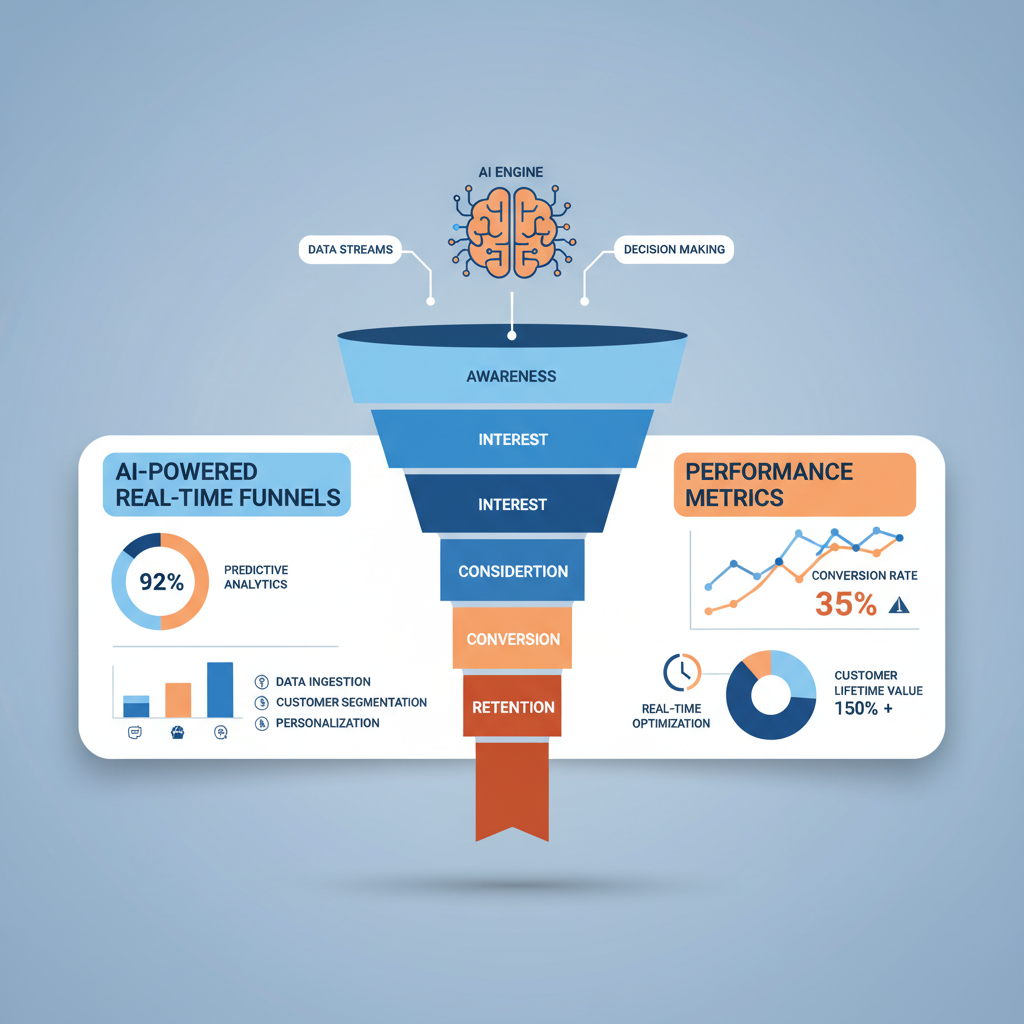
Implementing AI-Built Real-Time Funnels for Enhanced Customer Experience
To implement AI-built real-time funnels, businesses should start by analyzing their current customer journey. As our marketing blog explains, understanding the customer journey is crucial to creating an effective AI-built real-time funnel. By using AI tools to analyze user behavior and adapt marketing strategies in real time, businesses can create a seamless, data-driven marketing funnel performance.
- Use AI tools to analyze user behavior.
- Adapt marketing strategies in real time.
- Create a phased implementation plan.
- Ensure robust data governance.
Advanced Tactics for AI-Built Real-Time Funnels
For businesses looking to take their AI-built real-time funnels to the next level, continuous refinement is key. By using AI tools to analyze customer journeys and identify areas for improvement, businesses can optimize their AI-built real-time funnels for better performance. As our ad budget calculator shows, businesses can allocate their budget more effectively by using AI-built real-time funnels.
Additionally, businesses can use our case studies to learn from successful AI-built real-time funnel implementations. By following best practices and avoiding common mistakes, businesses can create effective AI-built real-time funnels that drive sales and enhance customer experience.
Results to Expect from AI-Built Real-Time Funnels
By implementing AI-built real-time funnels, businesses can expect to see significant improvements in conversion rates and customer experience. As Landing Page Best Practices That Convert explains, AI-built real-time funnels can help businesses create landing pages that convert. By using AI tools to analyze user behavior and adapt marketing strategies in real time, businesses can create a seamless, data-driven marketing funnel performance.
- Improved conversion rates.
- Enhanced customer experience.
- Increased sales.
Common Mistakes to Avoid in AI-Built Real-Time Funnels (Continued)
A common mistake businesses make when implementing AI-built real-time funnels is lack of transparency. As Facebook Ads for Ecommerce: A Complete Guide notes, businesses should be transparent about their data collection and usage. By being transparent, businesses can build trust with their customers and create effective AI-built real-time funnels.
- Lack of transparency.
- Inadequate testing.
- Insufficient data governance.
Want us to handle lead generation for you?
Advertizingly runs lead generation for growth-stage brands in the UK, US, Canada, and Australia — audits, setup, and ongoing management included.
Final Thoughts
In conclusion, AI-built real-time funnels are a powerful tool for businesses looking to enhance customer experience and drive sales. By using AI tools to analyze user behavior and adapt marketing strategies in real time, businesses can create a seamless, data-driven marketing funnel performance. As our AI marketing agency explains, businesses can maximize their campaigns by using AI-built real-time funnels. For more information on how to implement AI-built real-time funnels, contact us for an Advertizingly growth audit. Additionally, check out our resources on Retargeting Ads Strategy That Drives Sales, AI-Driven Personalization: How to Build Campaigns That Actually Convert, and Email Marketing Automation: The Full-Funnel Playbook for 2026 to learn more about how to create effective AI-built real-time funnels.
Breaking Down the Barriers: How AI-Built Real-Time Funnels Enhance Customer Journey
We’ve seen firsthand how AI-built real-time funnels can transform the customer experience, making it more personalized, responsive, and effective. By analyzing customer behavior and preferences in real-time, these funnels enable businesses to respond promptly to changing customer needs, thereby increasing engagement and conversion rates. Across the campaigns we’ve run, we’ve noticed that AI-built real-time funnels are particularly useful in identifying and addressing pain points that might otherwise go unnoticed.
So, what makes these funnels so powerful? For starters, they allow for real-time data analysis, enabling businesses to make informed decisions quickly. This, in turn, facilitates the creation of highly targeted and relevant marketing messages that resonate with customers. The real issue is that many businesses struggle to implement these funnels effectively, which is where expert guidance comes in.
Key Components of Effective AI-Built Real-Time Funnels
Understanding the Building Blocks
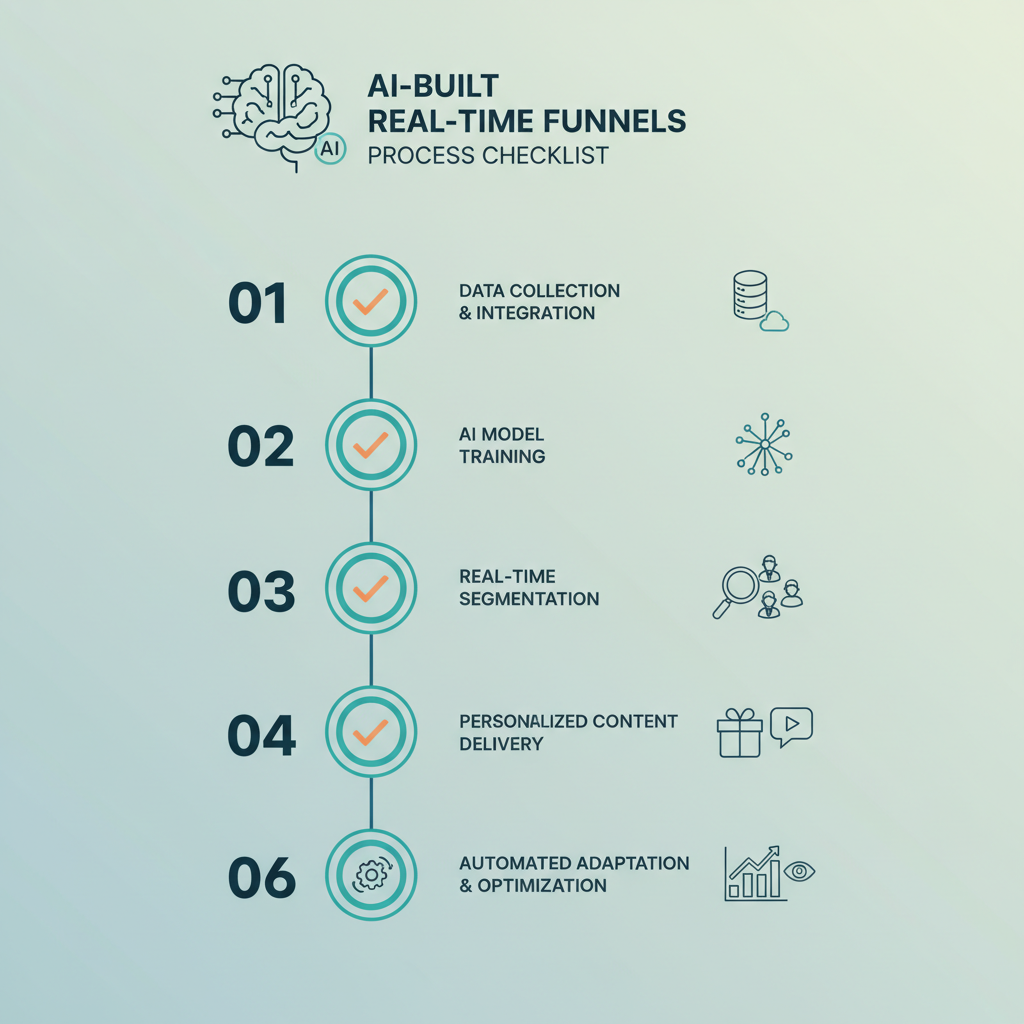
In our experience, successful AI-built real-time funnels comprise several key components, including data collection, analytics, and automation. Let’s be direct: without these elements working in harmony, the funnel is unlikely to yield the desired results. The following are crucial for building an effective AI-built real-time funnel:
- Data quality and integration: Ensuring that the data used to build the funnel is accurate, comprehensive, and integrated from various sources.
- Advanced analytics: Utilizing machine learning algorithms to analyze customer behavior and preferences in real-time.
- Automation and personalization: Using the insights gained from analytics to automate personalized marketing messages and offers.
That said, the complexity of implementing these components can be overwhelming for many businesses, which is why partnering with an experienced agency like Advertizingly can be beneficial.
Measuring Success: The Metrics That Matter for AI-Built Real-Time Funnels
When it comes to evaluating the performance of AI-built real-time funnels, most agencies get it wrong and it costs them. They focus on vanity metrics rather than key performance indicators (KPIs) that truly matter. In practice, metrics such as conversion rates, customer lifetime value, and return on investment (ROI) are far more indicative of a funnel’s success. Here’s how to measure the effectiveness of your AI-built real-time funnel:
- Track conversion rates at each stage of the funnel to identify bottlenecks.
- Monitor customer lifetime value to ensure that the funnel is attracting high-value customers.
- Analyze ROI to determine the overall profitability of the funnel.
- Conduct regular A/B testing to optimize the funnel’s performance.
And yet, despite the importance of these metrics, many businesses struggle to set up and track them effectively, highlighting the need for expert guidance.
Implementing AI-Built Real-Time Funnels: Challenges and Opportunities
Overcoming Common Obstacles
Let’s be direct: implementing AI-built real-time funnels is not without its challenges. From data quality issues to integration complexities, there are several obstacles that businesses must overcome. However, with the right approach and expertise, these challenges can be mitigated, and the benefits of AI-built real-time funnels can be fully realized. The following are some common challenges and how to address them:
- Data silos: Break down data silos by integrating data from various sources and ensuring that it is accessible and usable.
- Technical complexity: Partner with an experienced agency to navigate the technical complexities of implementing AI-built real-time funnels.
- Change management: Ensure that all stakeholders are aligned and prepared for the changes that AI-built real-time funnels will bring to the organization.
Consequently, businesses that successfully implement AI-built real-time funnels can expect to see significant improvements in customer experience and revenue growth. To get started, consider reaching out to Advertizingly for expert guidance and support.
Key Takeaways:
- AI-built real-time funnels can transform the customer experience by making it more personalized and responsive.
- Effective AI-built real-time funnels require data quality, advanced analytics, and automation.
- Measuring success requires focusing on key performance indicators such as conversion rates, customer lifetime value, and ROI.
- Implementing AI-built real-time funnels can be challenging, but with the right expertise, businesses can overcome common obstacles and achieve significant benefits.