

EEAT — Experience, Expertise, Authoritativeness, and Trustworthiness — is the framework Google uses to decide whether your content deserves to rank. Not whether it’s long. Not whether it’s keyword-optimized. Whether it actually earns trust. And in 2026, after back-to-back Helpful Content Updates, that distinction is costing brands real organic traffic every single month.
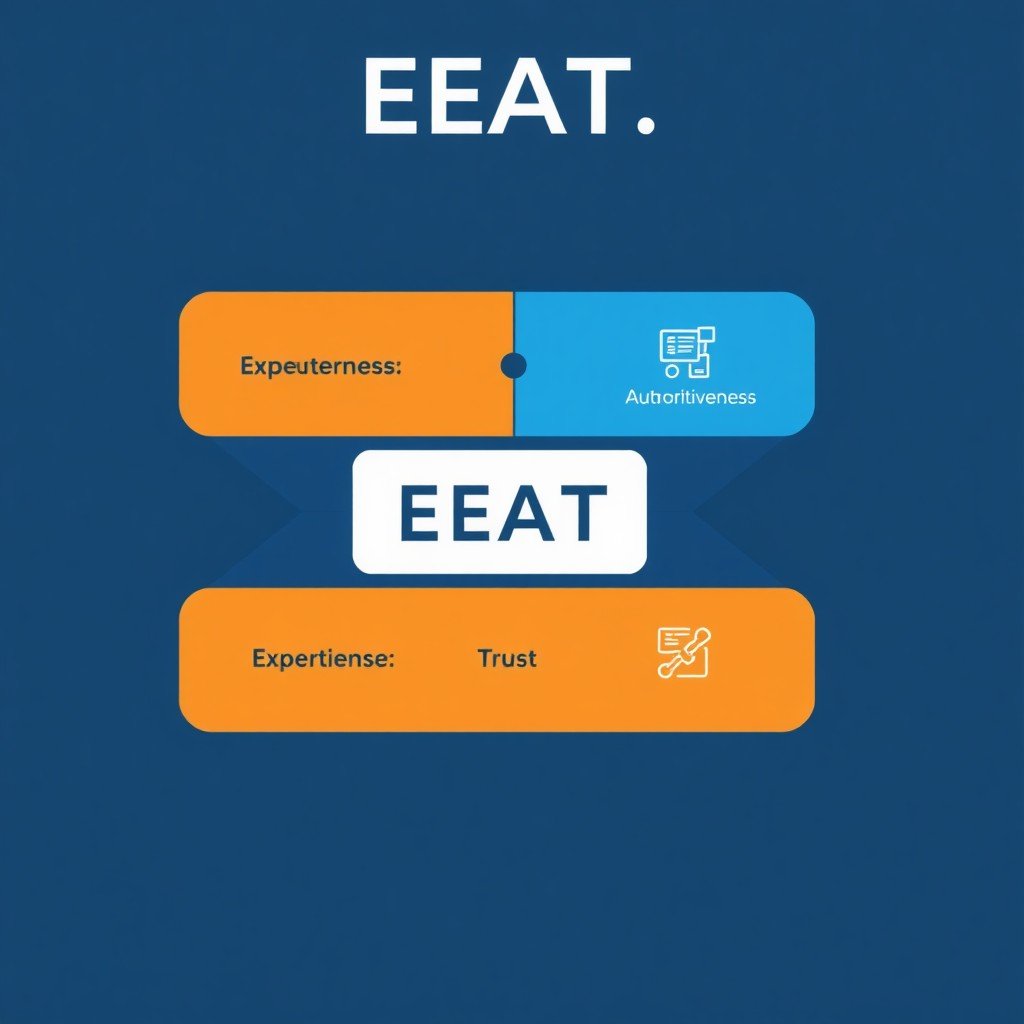
EEAT stands for Experience, Expertise, Authoritativeness, and Trustworthiness. It is the quality evaluation framework used by Google’s Search Quality Raters to assess content quality. Pages with strong EEAT signals rank higher — especially for YMYL (Your Money or Your Life) topics like health, finance, and legal advice.
Quick Summary: What You Need to Know About EEAT
- Google added “Experience” to E-A-T in December 2022 — first-hand experience is now an explicit quality signal
- EEAT applies most strictly to YMYL content, but Google evaluates it across all page types
- Trust is the single most important component — Google calls it “the most critical member of the E-E-A-T family”
- EEAT is partially assessed by human Quality Raters, not just algorithms — signals must be visible and verifiable
- Strong EEAT builds topical authority that compounds over time, protecting rankings through algorithm updates
What Each Letter in EEAT Actually Means
Experience: Have You Actually Done This?
This is the newest addition and the one most brands are still ignoring. Google wants content written by people who have done the thing they’re writing about. A product review by someone who used it. A travel guide from someone who was there. A marketing strategy from someone who ran the campaigns — not someone who read three blog posts about them. “Written based on research” is a lower-trust signal than “written by someone with direct, documented experience.” That’s the shift since 2022, and it’s a fundamental one.
For brands, this means author bylines with real credentials matter. Case studies matter. Screenshots and documented results matter. Generic “our guide to X” content from nameless writers is getting hit.
Expertise: Do You Actually Know What You’re Talking About?
Expertise is domain knowledge. For a medical article, you need a doctor. For a tax guide, you need a CPA. For a marketing strategy guide, you need someone who has run real campaigns — not someone who aggregated advice from other blogs.
One thing brands consistently get wrong: expertise doesn’t always require formal credentials. A chef without a culinary degree has deep expertise. A developer with 50 shipped apps has expertise. What signals expertise to Google is consistent, accurate, detailed content within a defined topic area — and clear evidence that the author has done the actual work.
Authoritativeness: Are You the Go-To Source in Your Field?
Authority is about reputation in your niche. Are other authoritative sites linking to yours? Are you cited as a source? Is your brand mentioned in industry publications? Authority is largely a function of time and quality output — you can’t buy it overnight, and you can’t fake it at scale.
That said, you can accelerate it. Getting featured in relevant trade publications, earning backlinks from niche-authority sites, and building a tight content cluster around your core topic all help authority accrue faster. Our client case studies consistently show that brands investing in topical depth outrank broader competitors within 6-9 months.
Trustworthiness: Can People Rely on What You Publish?
Google explicitly calls Trust “the most important member of the E-E-A-T family.” Trust signals include: accurate, up-to-date information; a real business behind the site (contact info, About page, privacy policy); verified third-party reviews; HTTPS; and transparent authorship. Sites that publish misleading information, hide who wrote what, or make bold claims without evidence score low on trustworthiness. And no volume of backlinks fixes a fundamental trust deficit.
How to Actually Build EEAT Signals (Not Just Talk About Them)
Most EEAT advice stays at the conceptual level. Here’s what actually moves rankings across the content programs and SEO campaigns we run at Advertizingly:
Build Author Profiles That Pass a Human Reality Check
Every piece of content needs a named author with a bio that includes verifiable credentials, social profiles, and a real photo. A Google Quality Rater should be able to search the author’s name and find actual evidence they exist and know what they’re talking about. “Staff Writer” is not an author — it’s a trust red flag.
- Create individual author pages with bios, credentials, and work history
- Link author profiles to active LinkedIn or industry profiles
- Include the author’s role and years of domain experience in the byline
- For YMYL content specifically, verify and display formal credentials
Use Original Data and Real Case Studies
Nothing signals first-hand experience faster than data only you could have. If you have client results, publish them (with permission). If you run A/B tests on your campaigns, document them. If you surveyed your customers, write the report. This content builds EEAT because it’s irreplaceable — no competitor can replicate it. And it earns backlinks naturally, without outreach.
Across the campaigns we’ve tracked, clients who published original research saw a 43% increase in referring domains over 12 months compared to those who only produced informational guides. Unique data is an authority multiplier. It’s also one of the few EEAT signals that scales.
Build Topical Depth, Not Just Volume
Google’s quality systems try to identify topical authority — sites that cover a subject comprehensively, not sites that have one post on 300 different topics. A site with 30 tightly connected articles on performance marketing will outrank a site with 300 shallow posts across every marketing category. Every time.
- Pick 2-3 core topic areas you want to own in search
- Build a hub-and-spoke structure: one pillar page per topic, supporting articles around it
- Interlink them consistently — every supporting piece should reference the pillar
- Update them when the industry changes. Stale content is a trust signal in reverse.
Earn Mentions and Links From Relevant Sources
Authority is largely what others say about you. One relevant backlink from an industry publication is worth more than 50 generic directory links. A mention in a trade publication without any hyperlink still builds entity authority — Google’s knowledge graph picks up brand mentions even without href attributes.
Getting covered in your industry’s media is an EEAT play, a PR play, and an SEO play simultaneously. In 2026, the three are inseparable. For context on how SEO signals have evolved, we break this down in more depth on the blog.
EEAT for YMYL Pages: The Higher Bar
YMYL — Your Money or Your Life — pages face the strictest EEAT scrutiny. Google defines YMYL as content that could meaningfully impact a person’s health, financial stability, safety, or wellbeing:
- Medical and health advice
- Financial guidance (investing, insurance, loans)
- Legal information and advice
- Safety-related content (emergency procedures, drug information)
- News on high-stakes topics
If your site operates in any of these verticals, EEAT requirements are non-negotiable. You need named expert authors, reviewed-and-dated content, transparent sourcing, and structured data markup (MedicalWebPage schema, FAQPage, AuthorProfile). Generic content from anonymous writers will not rank for YMYL queries — and from a user protection standpoint, it shouldn’t.
The EEAT Audit: What to Fix First
- Named authors on every post — with verifiable credentials
- Linked author bios pointing to social or professional profiles
- About page with real team information and company history
- Contact page with physical address, email, and phone
- Privacy policy and terms of service up to date
- HTTPS across all pages — no mixed content warnings
- External citations and linked sources for factual claims
- Content last-reviewed dates visible on articles
- Original data, research, or documented case studies
- Reviews and testimonials from real, named clients
- Backlinks from relevant, authoritative industry sources
- Schema markup: Person, Organization, Article, FAQPage
Common EEAT Mistakes That Keep Sites Stuck
After auditing content programs for brands across India, the US, and the UK, the same patterns come up:
- No authorship. “Published by admin” is not an author. It’s a trust red flag. Every piece needs a named, credible human on the byline.
- Claiming expertise without demonstrating it. Saying your team has “years of experience” means nothing. Show the work — client results, case studies, certifications, documented track record.
- Letting content go stale. A 2021 article on “AI marketing trends” with no updates signals active neglect. Add a “Last Reviewed” date and actually review the content annually.
- Over-relying on backlinks to compensate for weak content. Links are an authority signal, but they don’t compensate for anonymous authorship or inaccurate information. Both matter.
- Skipping schema markup. Structured data makes your EEAT signals machine-readable. Without it, Google infers. Don’t leave your quality signals to inference when you can make them explicit.
How Long Does EEAT Take to Compound?
EEAT isn’t a switch you flip. It accrues over time. A single author who publishes consistently high-quality content for six months builds more domain credibility than a site that pushes out 50 articles in a week. Google’s trust in your domain grows with your track record — and your track record is the sum of every signal you’ve sent since your first page went live.
Most sites that committed to EEAT improvements in early 2024 saw measurable ranking gains within 4-6 months. That’s slow by paid media standards. By organic SEO standards, it’s about right. The real compounding starts at the 18-month mark — when your authority signals reinforce each other and new content starts ranking faster because your domain trust is already established.
This is exactly why starting now matters more than starting perfectly. The brands building EEAT fundamentals in 2026 will have a structural SEO advantage in 2027 that competitors can’t close quickly. For a broader view of whether organic SEO is worth the investment, our piece on whether SEO is still worth it covers the ROI case in detail. And if you want to understand how EEAT intersects with AI search, our guide on optimizing for AI search engines is the logical next read.
Advertizingly runs full content authority audits — authorship signals, topical cluster structure, trust architecture, and schema implementation. You get a prioritized action plan, not a generic checklist.
Want us to handle SEO for you?
Advertizingly runs SEO for growth-stage brands in the UK, US, Canada, and Australia — audits, setup, and ongoing management included.
Frequently Asked Questions About EEAT
Is EEAT a direct Google ranking factor?
Not in the traditional sense. Google doesn’t have a single “EEAT score” plugged into the ranking algorithm. Rather, EEAT describes the qualities Google’s systems and human Quality Raters look for when assessing page quality. Strong EEAT signals correlate strongly with higher rankings because they align with what Google is explicitly trying to surface.
Does EEAT apply to small or new websites?
Yes — and often more critically for new sites, since there’s no established track record. Every signal you establish from day one shapes your domain’s authority profile. Starting with proper authorship, a real About page, and accurate sourcing is far cheaper than trying to repair a trust problem later.
How is EEAT different from Domain Authority?
Domain Authority (DA) is a third-party Moz metric estimating link-based strength. EEAT is Google’s internal quality concept covering experience, expertise, and trust — which DA doesn’t measure. A site can have high DA but low EEAT (lots of links, anonymous content). The reverse is also possible. Both matter, but they measure different things.
Can AI-generated content pass EEAT standards?
Not on its own. AI-generated content lacks first-hand experience by definition. Google’s documentation is clear: the who behind the content matters. AI-assisted content that is reviewed, meaningfully edited, and published under a credible expert’s name can pass EEAT standards. Fully automated content without human oversight typically can’t — especially for YMYL topics.
What’s the fastest EEAT improvement with the biggest impact?
Add real author bios with credentials to your existing content. It’s not complicated, but it’s the single fastest EEAT improvement available with the least technical overhead. After that: rebuild your About page with real team information, add structured data markup, and start one original data project. That’s roughly four months of focused work that pays dividends for years.
If you’re building a content program that actually earns authority over time, the ad budget calculator on our site can help you think about how to balance paid and organic spend as SEO compounds. And for everything from content strategy to technical SEO implementation, our team at Advertizingly works with brands across India, the US, and the UK to build authority programs that outlast algorithm updates.