Scaling ROAS in a Cookieless World: The Expert Strategy
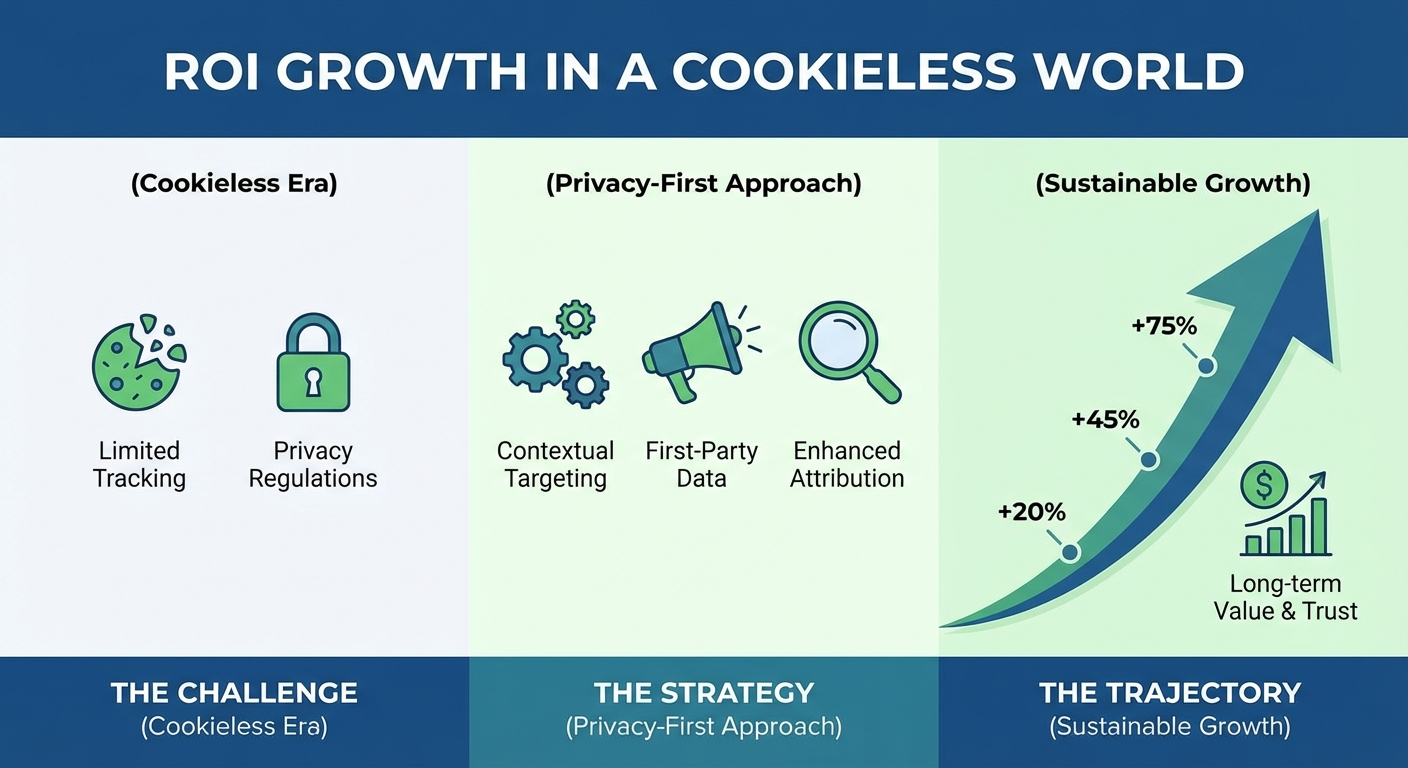
Look, the reality is, Scaling ROAS in a Cookieless World is the single most important challenge performance marketers face right now. The marketing landscape isn’t just “shifting”—it’s being ripped out from under us.
For years, we got lazy. We relied on third-party cookies like they were magic fairy dust that made our attribution perfect. Then privacy changes hit, browsers tightened their grip, and the panic set in.
I’ve talked to dozens of founders in the last month who think their ROAS is tanking because the market is down. Crucially, it’s not. Their tracking is just burning money. Your ROAS isn’t dead. Your old way of tracking it is. This shift isn’t a disaster; it’s a blessing in disguise, finally pushing us out of the era of spammy, intrusive pixel-stuffing and toward owning our own data.
In this guide to Scaling ROAS in a Cookieless World, we are going to break down exactly how you can take control of your data, shift your strategy from tracking to value-creation, and drive sustainable, long-term growth.
The Death of the Third-Party Cookie
Third-party cookies were a crutch. We treated users like data points, stalking them across the web until they felt pressured to convert. Was it effective for a while? Sure. Was it intrusive? Absolutely. Users and governments finally decided they’d had enough.
“When you lose that third-party crutch, you’re forced to get to know your audience on a deeper level. You have to become interesting. You have to build experiences that make them want to give you their data voluntarily.”
You stop being a digital stalker and start being a partner. This is the cornerstone of Scaling ROAS in a Cookieless World successfully. It requires a fundamental shift in how we approach our ad spend and user relationships.
Read More: Instagram Ads Cost 2026: Real Data, Reels, Meta & ROI
Leveraging First-Party Data
First-party data is the only asset that actually matters. If Facebook changes its algorithm tomorrow, or Google updates Chrome again, first-party data remains yours.
Don’t just “collect emails.” Build a value exchange. Build tools like ROI calculators, or create assessments that offer genuine utility. By offering genuine, free utility, you aren’t just collecting emails; you’re building a relationship based on trust and value.
| Feature | Third-Party Data | First-Party Data |
|---|---|---|
| Control | Platform-owned (volatile) | Owned by you (asset) |
| Longevity | Dying | Long-term asset |
| Trust | Low | High |
| Compliance | Difficult | Easy to manage |
Read More: Performance Marketing & Lead Generation for Real Estate
The Shift: Creative as the New Targeting
If you can’t target them based on their browsing history, how do you find them? You target them based on their interests—and you do that through your creative. In the cookieless era, your creative is your new targeting mechanism.
When you create ad content that speaks directly to a specific persona, addresses a specific pain point, and offers a specific solution, you are essentially pre-qualifying the user. People who don’t identify with the pain point simply won’t click.
This systematic approach to Scaling ROAS in a Cookieless World is essential for creating high-converting ads that perform without relying on third-party tracking pixels.
Read More: What Is Content Marketing?
Building Your First-Party Infrastructure
If you’re still relying purely on client-side pixels, you’re losing 30% or more of your attribution data to ad blockers and privacy-focused browsers. It’s like trying to fill a bucket with a massive hole in the bottom.
Stop installing five different pixels in your header. It slows down your site and kills your conversion rate. Instead, set up a GTM Server-Side container, which aligns with modern privacy sandbox standards.
- Spin up a server-side container in Google Tag Manager.
- Configure a custom sub-domain to serve the tracking script. This makes your tracking appear as first-party.
- Forward your event data from your website to your server-side container, then push that clean data to the Google Ads API or Meta Conversions API.
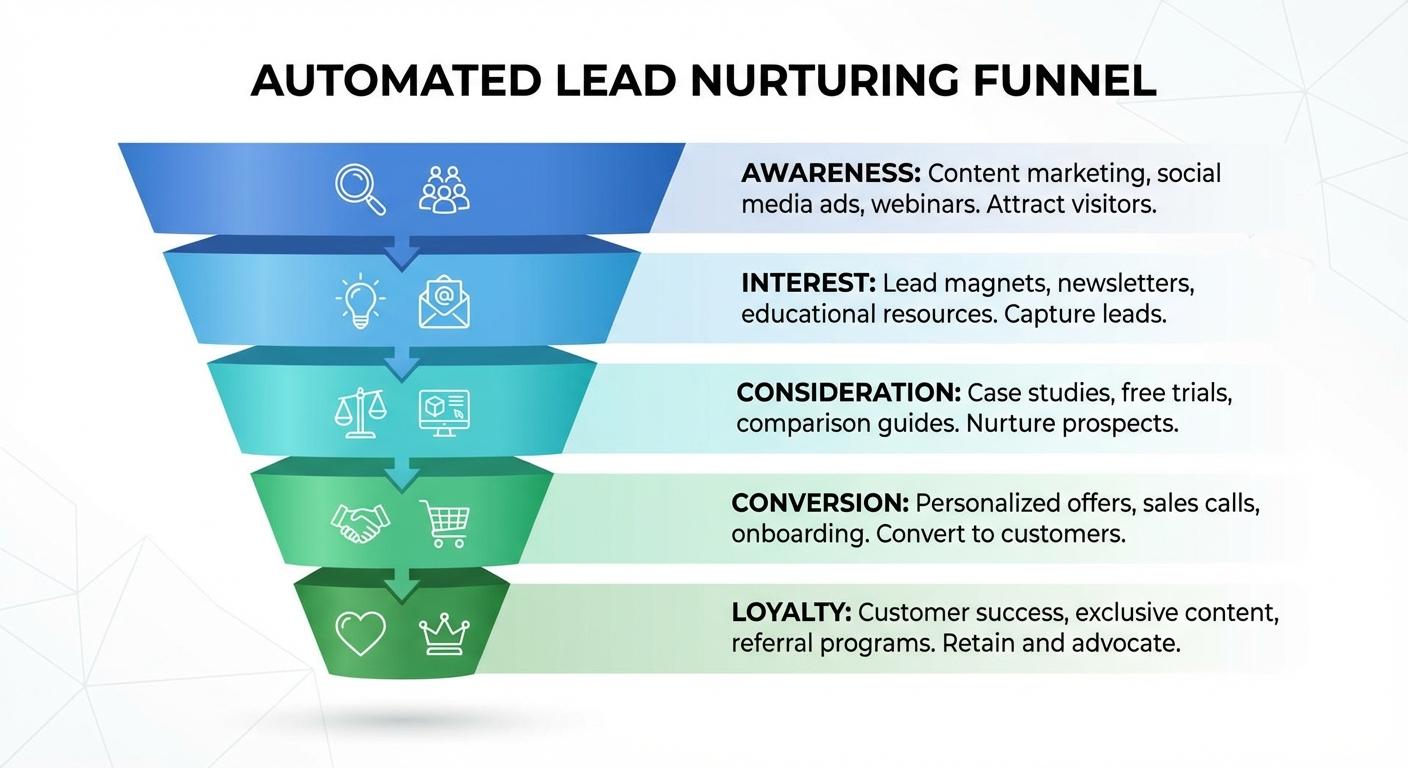
This is how you get your lost attribution back. It’s not a hack; it’s infrastructure.
Read More: Why Is Search Engine Optimisation Important?
The Role of AI in Cookieless Attribution
AI isn’t just about writing blog posts or creating images. In the context of attribution, AI is the engine that reconstructs the missing picture. You are moving from a world of deterministic attribution to probabilistic attribution, and AI is the key to making that model work.
Predictive modeling is an essential approach to Scaling ROAS in a Cookieless World because it allows you to optimize based on probability rather than just what you can directly track.
“When you optimize for CLV rather than a quick sale, your marketing budget becomes an investment. You stop playing ‘gotcha’ and start playing probability.”
Read More: What Is Marketing Automation?
Conclusion
The fundamentals haven’t changed: understand your customer, offer them value, and build trust. Get your data infrastructure in order, and you’ll see that Scaling ROAS in a Cookieless World is entirely possible when you focus on strategy over hacks. You need to adapt your tools, change your mindset, and start owning your own data today if you want to compete tomorrow.