SEO, or Search Engine Optimization, is all about making your website more appealing to search engines like Google. It’s the process of fine-tuning your site’s structure, content, and usability so it ranks higher on search engine results pages (SERPs). Why does that matter? Because better rankings mean more organic (unpaid) traffic, improved visibility, and an overall better experience for your visitors.
Unlike paid advertising, SEO builds long-term benefits. It’s not a quick fix but a lasting strategy to help your business thrive in the digital world.
Read more : Influencer Marketing in 2025: Why Authenticity Matters?
Why SEO is More Than Just Keywords
Sure, keywords are a big deal in SEO—but they’re only part of the puzzle. Modern SEO is like a mix of art and science. It involves understanding user intent, keeping up with search engine algorithms, and ensuring your website performs well technically.
Search engines now look at hundreds of factors, including content quality, site speed, and user experience. So, instead of just stuffing your content with keywords, focus on:
- Creating valuable, user-focused content.
- Optimizing for mobile users and improving load times.
- Building trust through secure and engaging pages.
A Quick Look at SEO’s Evolution
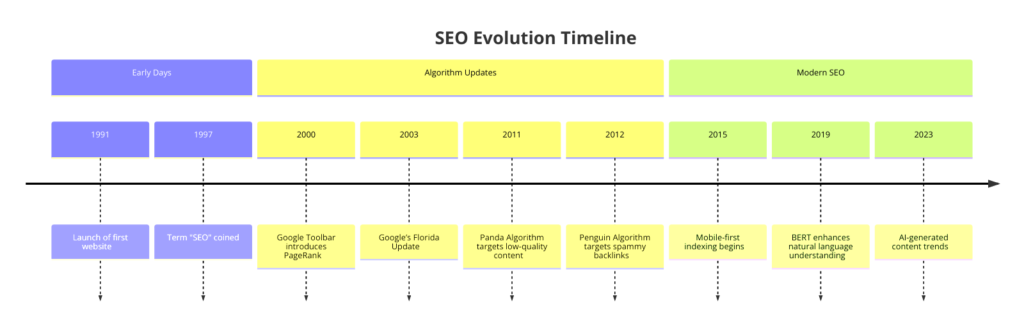
SEO has come a long way. Gone are the days of stuffing keywords into pages and hoping for the best. Today, it’s about delivering value and staying ahead of ever-changing algorithms.
Here’s a timeline of how SEO has evolved:
- 1990s: Early SEO was all about directories and keyword-heavy pages.
- 2000s: Google changed the game with algorithms like PageRank, focusing on backlinks.
- 2010s: AI-driven updates like Panda and Penguin penalized bad practices and rewarded meaningful content.
- 2020s: The focus shifted to mobile-first indexing, voice search, and user experience metrics like Core Web Vitals.
What does it mean today? If you’re solving problems for your audience and delivering a seamless online experience, you’re doing SEO right.
Read more : SEO in 2025: Creating Websites That Ranks
Why SEO Should Matter to You
Think about it: when people need something—a product, service, or just an answer—they go straight to a search engine. Research shows 68% of all online experiences start there. If your business isn’t showing up on the first page, you’re missing out on customers.
Here’s what great SEO can do for you:
- Drive Organic Traffic: Bring in consistent visitors without spending big on ads.
- Increase Conversions: Target the right audience, and you’ll see better engagement and sales.
- Enhance User Experience: Fast, mobile-friendly sites with easy navigation keep people coming back.
- Boost Brand Authority: Ranking well signals credibility and builds trust.
For local businesses, SEO can also connect you with nearby customers through tools like Google My Business.
Read more : What is Digital Marketing?
The Three Core Components of SEO
1. Technical SEO
This is the backbone of SEO—it’s about making sure your website’s infrastructure supports good rankings. Key aspects include:
- Page Speed: Nobody likes a slow website.
- Mobile-Friendliness: With most traffic coming from mobile, a responsive design is a must.
- Secure Connections (HTTPS): Builds trust with users and search engines.
- Sitemaps: Helps search engines understand your site structure.
- Structured Data: Improves visibility with features like rich snippets.
2. On-Page SEO
This is what you control directly on your website:
- Keywords: Research tools like Ahrefs can help you find what your audience is searching for.
- Content: Create high-quality posts that inform, entertain, or solve problems.
- Meta Tags: Think of these as your site’s headlines—they need to grab attention.
- Internal Links: Guide visitors to related content and make your site easier to navigate.
3. Off-Page SEO
This is about building authority through external strategies:
- Backlinks: Links from other reputable sites act like votes of confidence.
- Social Media: Use platforms to drive traffic and engage with your audience.
- Local SEO: Optimize for location-based searches—perfect for connecting with nearby customers.
Staying Ahead of Search Engine Algorithms
Read more : 10 Social Media Trends For 2025
Google’s algorithms are constantly evolving, but a few fundamentals always matter:
- E-A-T (Expertise, Authority, Trustworthiness): Build credibility with top-notch content.
- User Metrics: High engagement (like time spent on your site) signals satisfaction.
- Backlinks: Quality matters more than quantity.
Tools to Simplify SEO
Make life easier with tools that help track and improve your efforts:
Free Tools:
- Google Analytics: Insights into traffic and user behavior.
- Google Search Console: Spot performance issues and monitor your rankings.
- Ubersuggest: Great for keyword ideas and competitor research.
Paid Tools:
- SEMrush: Perfect for keyword tracking and content optimization.
- Ahrefs: A go-to for backlink analysis.
- Yoast SEO: Simplifies on-page SEO, especially for WordPress sites.
What to Avoid in SEO
- Keyword Stuffing: It’s outdated and hurts readability.
- Duplicate Content: Always create unique and valuable posts.
- Ignoring Analytics: If you’re not tracking results, you’re guessing.
What’s Next for SEO?
The future is all about adapting to new tech and trends. Keep an eye on:
- Voice Search: Think conversational queries (“What’s the best pizza near me?”).
- Core Web Vitals: Metrics like load speed and visual stability are non-negotiable.
- Video Content: Optimized videos can boost discoverability.
- AI and Machine Learning: Expect even more personalized search experiences.
FAQs About SEO
What’s the goal of SEO?
To increase your visibility and drive organic traffic while improving user experience.
How long does it take to see results?
Typically, 4–6 months. Patience is key.
What’s the difference between On-Page and Off-Page SEO?
On-page SEO is what happens on your site; off-page involves building authority through external factors.
Does blogging help?
Absolutely! Blogs target niche topics and build engagement.
Read more : What Is Social Media Marketing?
Conclusion
SEO isn’t just another marketing tactic—it’s an investment in your business’s long-term growth. By focusing on what truly matters—great content, technical optimization, and user satisfaction—you can create a strategy that delivers real, sustainable results.
Take it step by step, keep learning, and watch your online presence grow.
We are a Digital Marketing Agency serving in India, USA, UK, Canada & UAE, From SEO to social media, we deliver results that boost visibility, leads, and ROI.